Scaling business regionally plays an important part in building a brand. In many ways, successful regional growth programs rely on the same fundamentals as national brand rollouts: consistent leadership, repeatable processes, disciplined quality control, early due diligence, and a partner who understands the business behind the projects. The difference lies in how those fundamentals are applied. Regional programs often move at a more deliberate pace, involve fewer locations, and create greater opportunity to tailor each project through close relationships with local stakeholders.
Galloway applies decades of multisite program experience to help business owners balance brand consistency with the needs of individual locations.
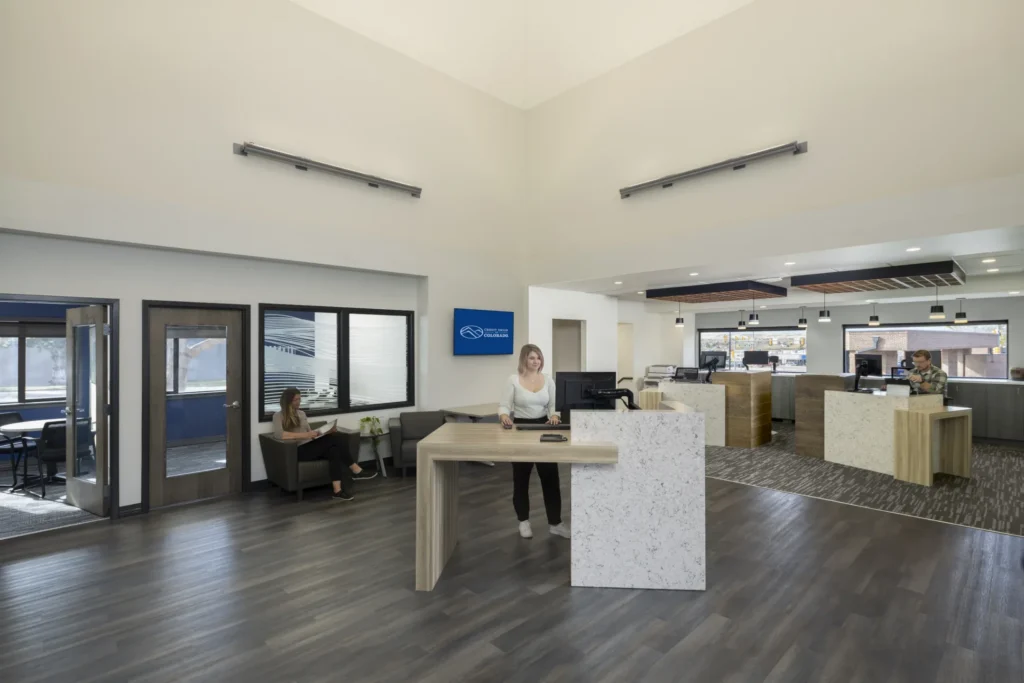
Galloway’s regional program work for Credit Union of Colorado balances consistent brand standards with the unique needs of each branch, creating spaces that feel familiar while responding to how employees and members use each location.
“We’re not just taking a design, copying and pasting it, and dropping it onto a new site,” says Gary Rhodes, principal and regional architecture team manager. “We’re understanding how they operate and becoming part of their success.”
Through that experience, we’ve seen five factors consistently shape successful regional growth programs.
1. Apply Proven Program Principles at a Regional Scale
When going from one location to two, three, or more, consistency does not happen on its own. It requires a clear structure for decision-making, communication, documentation, and quality control.
As development begins, brands benefit from a dedicated point of contact who understands the business’ growth program, its goals, and can coordinate the people and resources needed for each project. They also benefit from continuity among the key architects and engineers working behind the scenes.
“Clients like the fact that we have depth in our services and the bandwidth to support them, but they also like having the same key individuals and having that continuity,” says Hoshi Brooks, principal and senior interior design manager at Galloway. That continuity helps preserve program knowledge from one location to the next.
For decades, Galloway has supported both renovations and ground-up locations for brands through a multidisciplinary team spanning architecture, civil engineering, and interior design. Our clients have access to Galloway’s multidisciplinary resources and capacity while continuing to work with familiar leaders who understand their business’ standards, priorities, and history.
Standardized workflows provide another layer of continuity. For example, the project team maintains a detailed list of questions to address on every program project, including decisions as specific as outlet colors. The list evolves as new considerations emerge, helping the team capture lessons and apply them across future locations.
These systems create efficiency without replacing careful confirmation. A preference that applied to the previous 10 projects should never be assumed for the 11th.
2. Preserve the Brand While Responding to Place
Some of the most successful regional programs create familiarity without imposing sameness. Customers should recognize the business when they enter a location, but the building should also feel appropriate for its surroundings.
“You adjust the project depending on the vernacular around it,” says Gary. “It becomes part of the community and not just something placed there.”
National programs regularly adapt to state and local codes, permitting requirements, and site conditions. Regional programs navigate many of those same variables, often at a more granular level. The relevant differences may be between Denver and Durango rather than Colorado and Ohio, but jurisdictional requirements, existing conditions, architectural context, and community expectations can still significantly influence a project.
For many brands, recognizable interiors, signage, layouts, and select design elements create continuity across locations. Yet exterior architecture and materials can vary more substantially to reflect the location. For example, a coffee shop in Southern California may look distinctly different from the outside of that same coffee shop in Santa Fe, New Mexico, while still delivering a consistent experience once customers enter.
The strongest regional programs define which elements must remain consistent and where thoughtful variation can improve the outcome. Standardization creates the foundation. Local adaptation makes each location meaningful.
3. Understand How Each Location Really Works
Even under a single brand, no two locations operate the same way. Customer behavior, staffing patterns, services, building conditions, and community needs can all influence how a building should function.
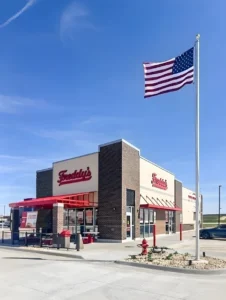
Through architectural design, MEP engineering, and site lighting services, Galloway helps Freddy’s Frozen Custard & Steakburgers maintain its recognizable prototype while adapting locations across its Midwest regional program to site-specific and operational needs.
Local leaders are often the best source of that insight. For a financial institution, branch managers understand how employees use the space, how customers move through it, which services are most important, and where prior layouts have created challenges. Because a branch can feel like a second home to the people who work there, their perspective should help inform the design from the beginning.
Listening to local stakeholders helps the project team maintain the overall brand experience while addressing how each location operates. Doing so requires designers and engineers to think beyond the physical project by understanding why the business is investing in the market, how it serves the community, and what employees and customers need from the location.
That understanding is especially important for regional businesses growing through a strong local presence. The success of each location therefore depends on more than an efficient floor plan. It depends on creating a place where employees can serve their members well and where the community feels welcomed.
4. Turn Every Project into Insight for the Next
For design firms, repeat work creates value when teams use it to improve. Each completed development offers information about what worked, what did not, and what should change before the next project begins.
Regular project calls keep immediate decisions moving, but strong regional partnerships also create space for broader conversations. During recurring client meetings, Galloway meets with its program partners to discuss successes, identify opportunities for improvement, and align priorities beyond active projects. Weekly communication also gives team members the chance to know one another as people, contributing to a more cohesive and collaborative working environment.
Feedback from location managers and employees provides another important measure of performance. Schedule and budget remain essential, but a successful location should also work well for the people using it and generate enthusiasm from the community. When employees feel heard, customers are excited to have a new development nearby, and the building feels at home in its setting, the program is delivering value beyond the project metrics.
Continuous improvement also requires transparency. Unexpected challenges can occur in any program. Trust is built through how quickly they are acknowledged, communicated, and resolved. By documenting lessons, refining questions, and incorporating feedback, Galloway’s teams strengthen both the process and the client experience over time.
5. Build a Partnership That Extends Beyond the Current Project
The clearest sign of a successful program relationship may be what happens between projects.
“I think success is when clients start asking us questions outside of the current projects because we’re being seen as a trusted advisor,” says Hoshi.
That trust has extended well beyond Galloway’s original scope. When a vehicle accident damaged an exterior wall at a completed facility, the client called Galloway to coordinate a structural evaluation. Since then, the same client has also trusted the team to evaluate drainage concerns and address sidewalk and ramp issues at locations Galloway did not originally design.
These requests demonstrate the value of a multidisciplinary partner who understands the broader portfolio and can connect the client with knowledgeable professionals across disciplines. Rather than beginning with a new consultant each time a need arises, clients can turn to a team that already understands their business, standards, and history.
That familiarity supports faster problem-solving and better-informed recommendations. More importantly, it reflects a partnership grounded in responsiveness, transparency, and genuine investment in the client’s long-term success.
Regional programs require the structure and discipline of national rollout work, paired with a closer understanding of individual locations and the communities they serve. Through consistent teams, multidisciplinary expertise, and relationships that carry knowledge from one project to the next, Galloway helps regional businesses grow without losing sight of what makes each location successful.
We are nationally recognized and locally preferred. We would love to work with you on your next project.
Contact Us