Transportation Demand Management (TDM) is one of the most effective ways to improve how a development functions long after construction is complete. Yet, when people think about what makes a successful project, they often focus on the buildings, streetscapes, or amenities.
However, one of the biggest factors influencing long-term performance is whether employees, residents, and visitors can access and navigate those spaces efficiently.
TDM influences those travel decisions by encouraging alternatives to single-occupancy vehicles such as mass transit, biking, walking, carpooling, and vanpooling. Done right, it creates developments that are easier to access, more efficient to operate, and better connected to the communities they serve. While many municipalities require TDM as part of the entitlement process, its value extends far beyond regulatory compliance.
The question, then, isn’t whether TDM is required. It’s how a thoughtful mobility strategy can make development more successful.
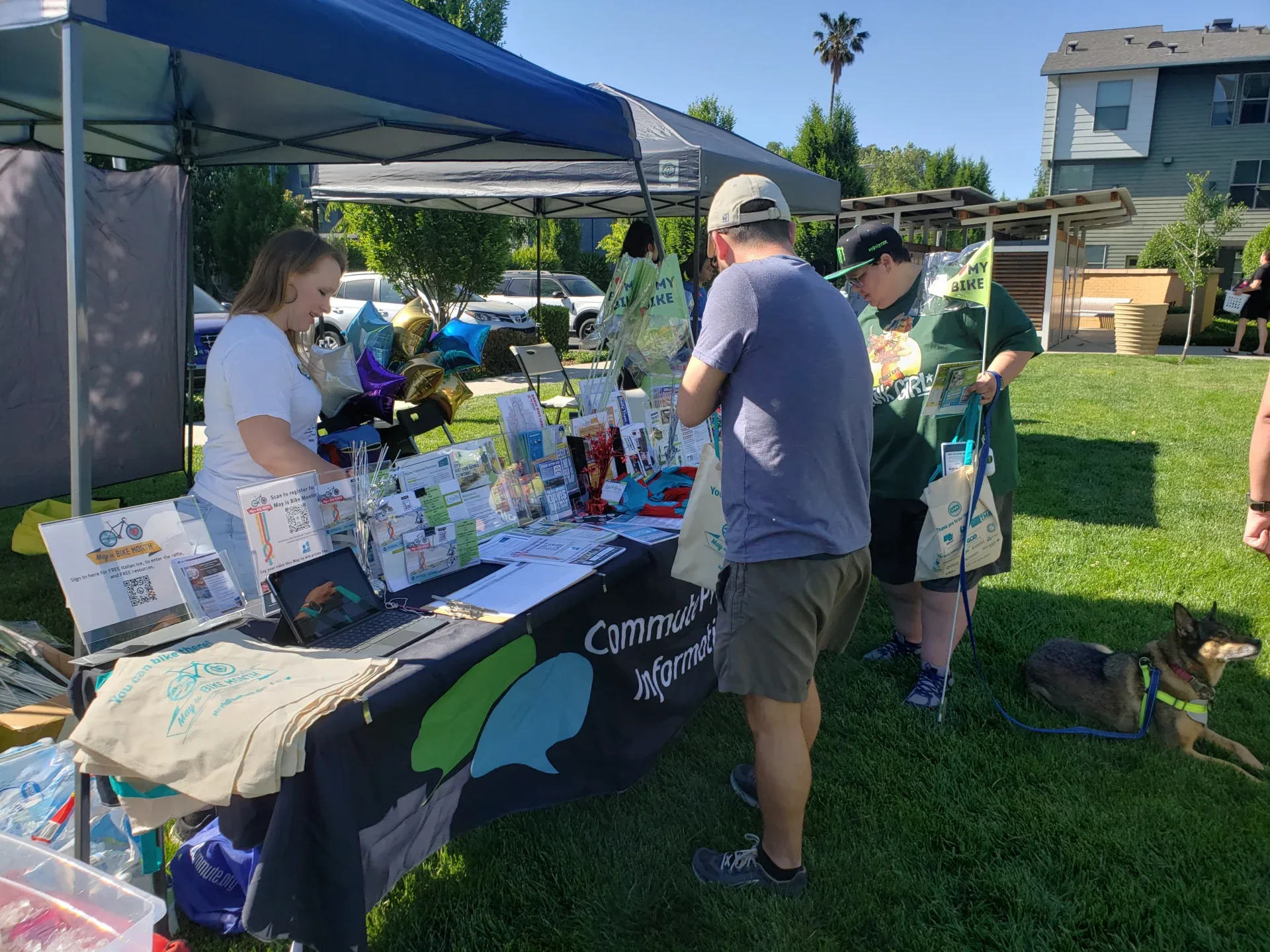
TDM project manager Claudine Schneider shares multimodal transportation options and resources with Capitol Yards residents.
When considered early in planning, TDM helps optimize parking strategies, improve site efficiency, reduce unnecessary infrastructure investments, support sustainability goals, and create better experiences for employees, residents, and visitors. Galloway’s ActiveScore Accredited Professionals are trained to evaluate active travel facilities and services and advise clients on improvements that make walking, biking, and other active transportation options safer and more accessible. By helping properties encourage alternatives to driving, they can support more sustainable mobility and reduce transportation-related emissions.
In some jurisdictions, it may also support parking reductions that lower construction costs while freeing valuable space for additional amenities or development. But infrastructure alone doesn’t create those outcomes. A sidewalk doesn’t guarantee people will walk, a transit stop doesn’t guarantee they’ll ride transit, and a bike lane doesn’t guarantee they’ll ride a bike.
The missing piece isn’t infrastructure; it’s understanding what motivates people to use or not use it.
“A newly constructed bike lane is not as purposeful if people don’t know how to use it and don’t feel safe,” says Raven Royal, TDM project manager at Galloway. “We have this bike lane here. There’s a Metro half a mile away, but 75% of people are driving. Why is that? That’s super important to figure out and identify to create a successful solution.”
Her observation captures the purpose of TDM. Infrastructure gives people options, but TDM helps people choose those options.
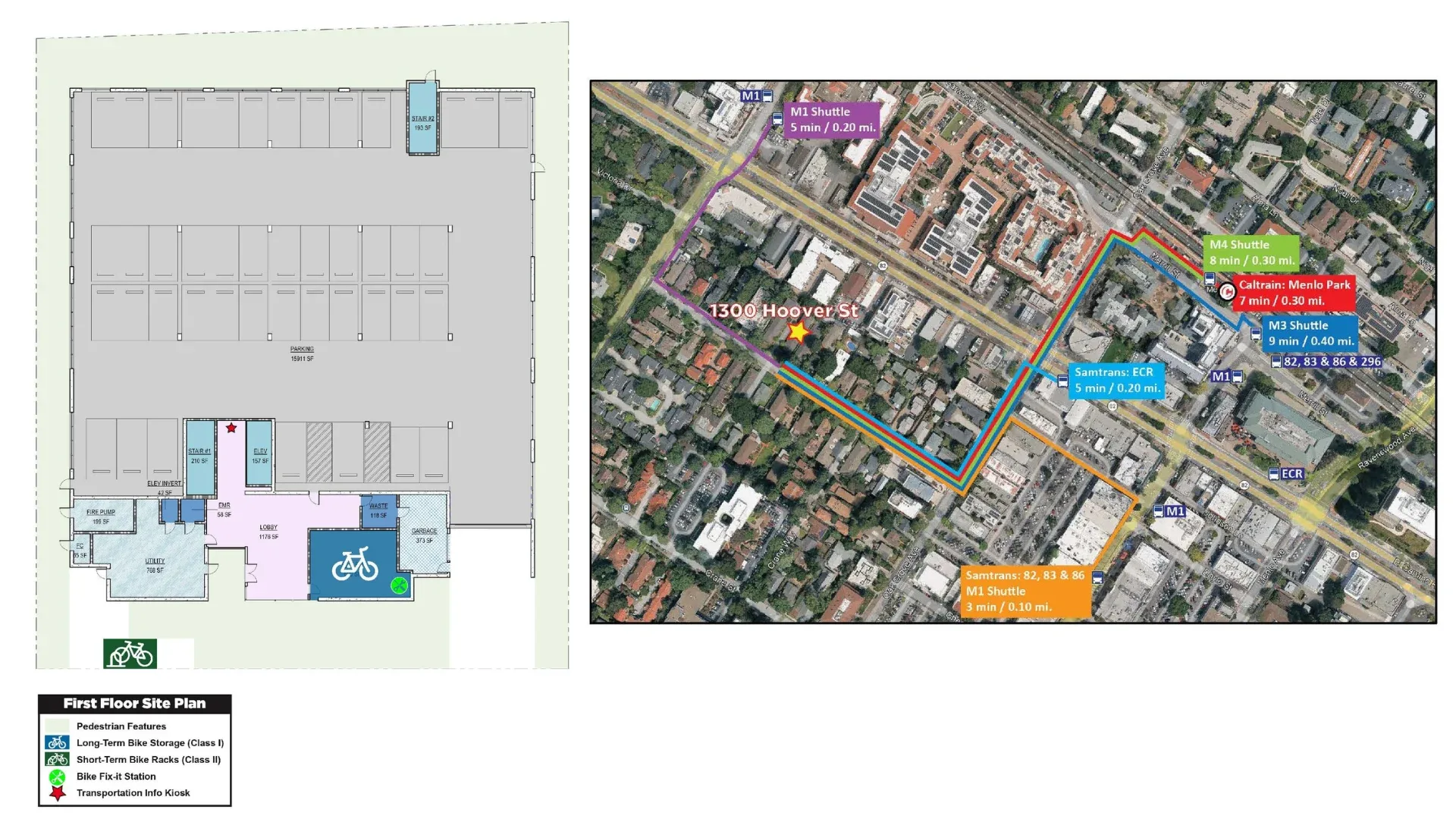
Left: A multifamily TDM site plan identifies bike storage, a transportation kiosk, bike fix-it stations, and pedestrian features. Right: A site access map shows walking routes to nearby shuttles and rail service.
The quality of a TDM plan matters, but its true success is measured by what happens after it’s written.
“Many firms specialize in developing TDM plans. Our experience extends beyond planning into implementation,” says Courtney Menjivar, Galloway’s TDM team manager. “This real-world implementation experience makes a tremendous difference in whether that plan sits on the bookshelf or actually gets implemented and turns into measurable results.”
That distinction shapes the way Galloway approaches every project. Because the team has extensive experience implementing and managing TDM programs, they understand what it takes to move a strategy from paper into practice. They know which recommendations are realistic, how implementation costs may affect decision-making, which strategies require additional stakeholder coordination, how programs need to be managed over time, and where challenges are likely to arise before they become obstacles.
As Courtney explains, writing a successful TDM plan means thinking beyond what should happen and designing recommendations that clients can realistically implement. That implementation mindset results in strategies that are practical, achievable, and tailored to the realities of project delivery, not simply written to satisfy a jurisdictional requirement.
Transportation decisions influence far more than mobility. They affect parking demand, circulation, infrastructure investments, leasing potential, tenant satisfaction, and the overall experience of a development. Because TDM touches so many aspects of a project, treating it as a standalone service often means mobility decisions happen after many of the most important planning decisions have already been made. The most effective TDM strategies are developed alongside planning, civil engineering, traffic engineering, architecture, landscape architecture, surveying, and entitlement services.
That value became clear on a recent University of Utah project. What began as planning for a parking structure evolved into a broader conversation about creating a multimodal transportation hub. By bringing TDM into the discussion alongside architects, planners, and engineers, the team looked beyond simply accommodating vehicles and explored how the facility could support transit, micromobility, rideshare, and future transportation needs.
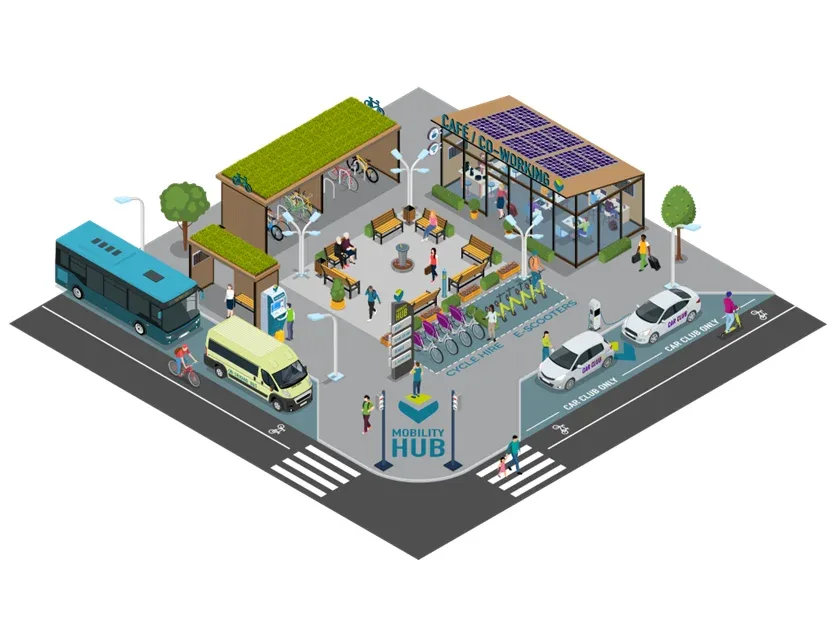
A concept for Georgetown’s mobility hub integrates shuttle and regional transit service, ride-hailing areas, micromobility options, real-time information, incentives, and programming.
“We went from building a parking garage to creating a mobility hub,” says Courtney. “It became a transportation experience that could be agile, flexible, and support the many ways people move across campus. That shift added value for the client and strengthened the long-term return on investment.”
It’s an example of how integrating TDM early can uncover opportunities that might otherwise be overlooked, transforming transportation infrastructure into an asset that better serves both users and the broader community.
No two developments move people the same way. A transit-oriented mixed-use district has different mobility needs than a suburban office campus or an industrial employment center. Every successful TDM strategy is tailored to a project’s location, infrastructure, users, and long-term goals rather than relying on a one-size-fits-all solution.
At the center of every successful strategy is one simple question: What motivates people to change the way they travel?
“I really enjoy finding out what makes people tick in terms of the decisions and choices that they make,” says Jack Wright, TDM analyst at Galloway. “I then use the data we collect about users’ habits for determining the best ways we can market changes they would really accept and enjoy.”
Understanding those motivations shapes every successful TDM strategy from commuter outreach and mobility education to incentive programs and communication campaigns.
“A lot of it really boils down to behavior change marketing,” adds Elizabeth Hughes, Sr. TDM project manager.
Successful TDM is about making change easier by understanding why people travel the way they do and removing the barriers that keep them from choosing another option. Whether introducing someone to public transit for the first time, helping a resident feel comfortable commuting by bike, or creating incentive programs that encourage participation, those incremental changes transform transportation infrastructure into meaningful, everyday mobility.
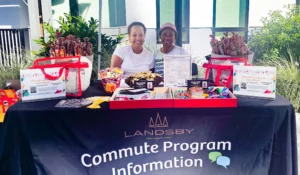
TDM project managers Natanya Bone and Mimi Attias conduct community outreach to inform Landsby residents about their commuter program options and resources.
A TDM plan is just the starting point. Transportation patterns evolve as communities grow, transit service expands, new tenants move in, and commuting habits change. Successful TDM programs evolve alongside them through performance monitoring, user engagement, and continuous refinement.
That long-term perspective has helped Galloway build client relationships that span years.
“We’ve been a part of some clients’ programs from the very beginning of setup through implementation over the course of 10 years,” says Raven. “Our clients trust us to not only create their TDM programs but continue maintaining them and upgrading them throughout the years.”
Those long-term partnerships allow programs to remain relevant, effective, and responsive long after a development opens.
Whether TDM is required by a municipality or pursued proactively, it represents an opportunity to improve mobility, optimize infrastructure investments, strengthen tenant and resident experiences, and enhance the long-term performance of a development. Projects that make it easier for people to move efficiently are better positioned to attract tenants, support communities, and adapt to changing transportation needs in the years ahead.
The most successful developments don’t simply provide transportation options. They create places where people choose them because they are convenient, accessible, and integrated into everyday life.
Visit our TDM services page to learn more and to contact our team about your project today.
We are nationally recognized and locally preferred. We would love to work with you on your next project.
Contact Us