As brands expand into new markets, maintaining consistency while adapting to local conditions becomes increasingly complex. The most successful rollout programs are built on more than design standards alone, requiring a coordinated strategy that supports efficient decision-making, predictable execution, and long-term scalability. This series examines the foundational elements that help brands grow with confidence.
In Part 2 of this series, we examined how strong program leadership, collaborative team structures, and standardized processes create the foundation for consistent execution across multiple markets. The next step is working with the right partner to minimize the schedule and cost impacts that can emerge as projects encounter unique site conditions, regulatory requirements, and community expectations.
Many of the most expensive rollout challenges occur long before construction begins. Site conditions, zoning restrictions, utility constraints, permitting requirements, and community expectations all have the potential to impact schedules, budgets, and project feasibility. Successful brands understand that successful outcomes begin during due diligence.
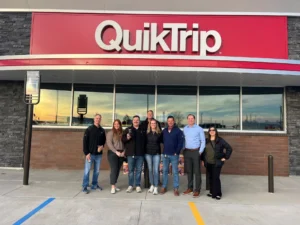
Jenny Romano (center) celebrates the grand opening of the 24th Colorado QuikTrip location with the QuikTrip team. Moments like these reflect the relationship-driven foundation of rollout programs, where trust, collaboration, and ongoing engagement help support successful delivery beyond project completion.
Rollout programs operate within a dynamic balance of four forces: brand standards, local regulations, site constraints, and community expectations. Each of these forces is interpreted differently from one jurisdiction to another, which means every project requires careful navigation of both technical requirements and local expectations.
“Talk to the jurisdiction so they understand the heart of the program,” says Jenny Romano, senior civil project manager and principal at Galloway. “Success comes from aligning community expectations with brand standards.”
Site adaptation is where much of this balancing act occurs. Most prototypes represent approximately 85 percent of a standard solution, while the remaining portion is customized to address local conditions, codes, and jurisdictional requirements. In practice, knowing when to maintain a standard and when to adapt often depends on how a local review body interprets and enforces requirements.
In California, seismic requirements may drive structural modifications. In Florida, hurricane-resistance standards can significantly influence design decisions. Other jurisdictions may impose unique architectural guidelines or development restrictions that require careful negotiation between brand intent and local interpretation.
As Ray explains, “We are the keepers of our clients’ brands, ensuring they are represented consistently while still meeting local requirements.”
The key is understanding which standards are essential to protect and where flexibility can support project success, particularly when jurisdictional expectations or interpretations create conflict with prototype standards.
Strong due diligence programs help teams identify those issues before they become costly surprises.
“It all starts with proper site investigation. That is the most critical piece of a multi-unit program,” says Bob Ziegenfuss, regional civil team manager and principal at Galloway.
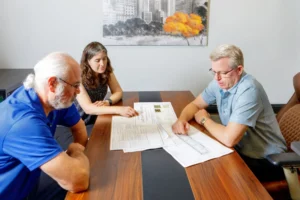
Bob Ziegenfuss reviews plans with his team, underscoring his approach to national program delivery as a “quarterback” across disciplines. He focuses on aligning teams, streamlining communication, and ensuring early due diligence and site-specific understanding that support speed to market.
Site investigation reports, zoning analyses, code reviews, and pre-application meetings help surface project risks early, allowing teams to make informed decisions before design advances too far. These early conversations also help clarify how local jurisdictions are likely to interpret requirements, which can significantly influence design direction and approval timelines.
For growing brands, this proactive approach creates greater predictability, reduces redesign efforts, and helps keep expansion programs on schedule.
Brand rollout programs require a different mindset than traditional project delivery. While many design and engineering teams are structured around longer project timelines and deeper iteration cycles, program work demands speed, flexibility, consistency, and scalability in environments where conditions are constantly shifting.
Successful program delivery depends on professionals who can move quickly without sacrificing quality, even as scope changes, client requests, vendor constraints, and jurisdictional feedback emerge across multiple projects at once. Teams often transition between assignments, clients, and markets within the same day while maintaining visibility across both individual projects and the broader portfolio.
“You’ve got to be quick. That’s the thing. It’s a fast-paced world and not every firm is cut out for it,” says Chris Carlson, regional architectural team manager and principal at Galloway.
That pace requires strong communication, disciplined processes, and the ability to make decisions quickly under pressure while maintaining alignment across the larger program. Small issues can scale across multiple locations if they are not identified and addressed early.
Structure is what makes speed sustainable.
Budget discipline is equally important. Program work often operates under aggressive financial targets, requiring teams to manage resources carefully while protecting performance expectations.
The most effective program teams also maintain continuity through experienced personnel who understand the client, the prototype, and the broader program workflow. That continuity supports consistency, mentorship, and stability as projects move rapidly through different phases.
At the same time, program work is not only about efficiency. It requires perspective on purpose. The work is fast-paced and repetitive, but it is also impactful, whether improving safety through design or enabling growth in new communities. That connection to purpose helps teams stay engaged and focused.
For brands pursuing aggressive expansion goals, partnering with specialists who understand the realities of program delivery can significantly improve predictability, consistency, and long-term success.
Successful brand expansion is not about delivering a single project. It is about creating a repeatable system that supports growth across dozens or hundreds of locations while maintaining quality, speed, and brand consistency.
Galloway’s Full Spectrum Approach™ brings together the collective knowledge and experience of multiple disciplines from the outset, creating a collaborative environment where opportunities and challenges are identified early, communication is streamlined, and solutions are developed proactively.
By combining cross-disciplinary insight, local market knowledge, and decades of national program experience, Galloway helps brands reduce risk, accelerate delivery, and scale with confidence.
Whether supporting regional growth initiatives or nationwide expansion programs, our goal remains the same: helping clients move faster, make better decisions, and build programs designed for long-term success.
We are nationally recognized and locally preferred. We would love to work with you on your next project.
Contact Us